
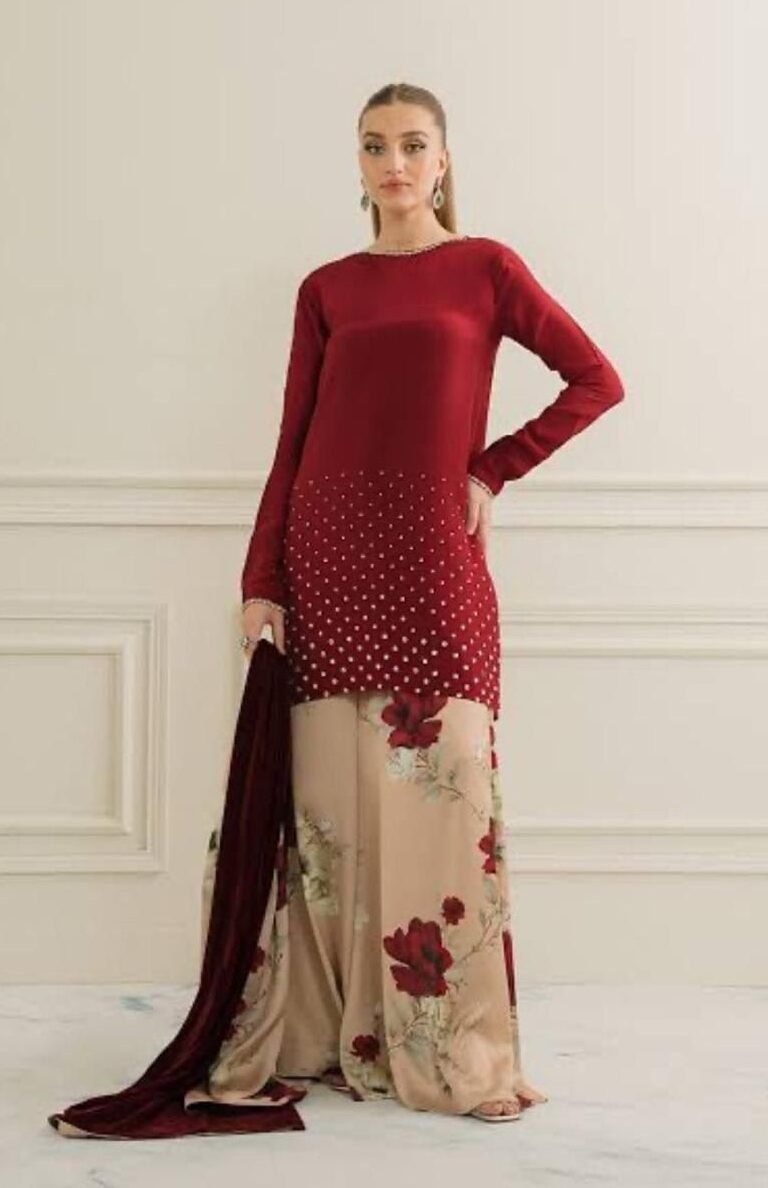
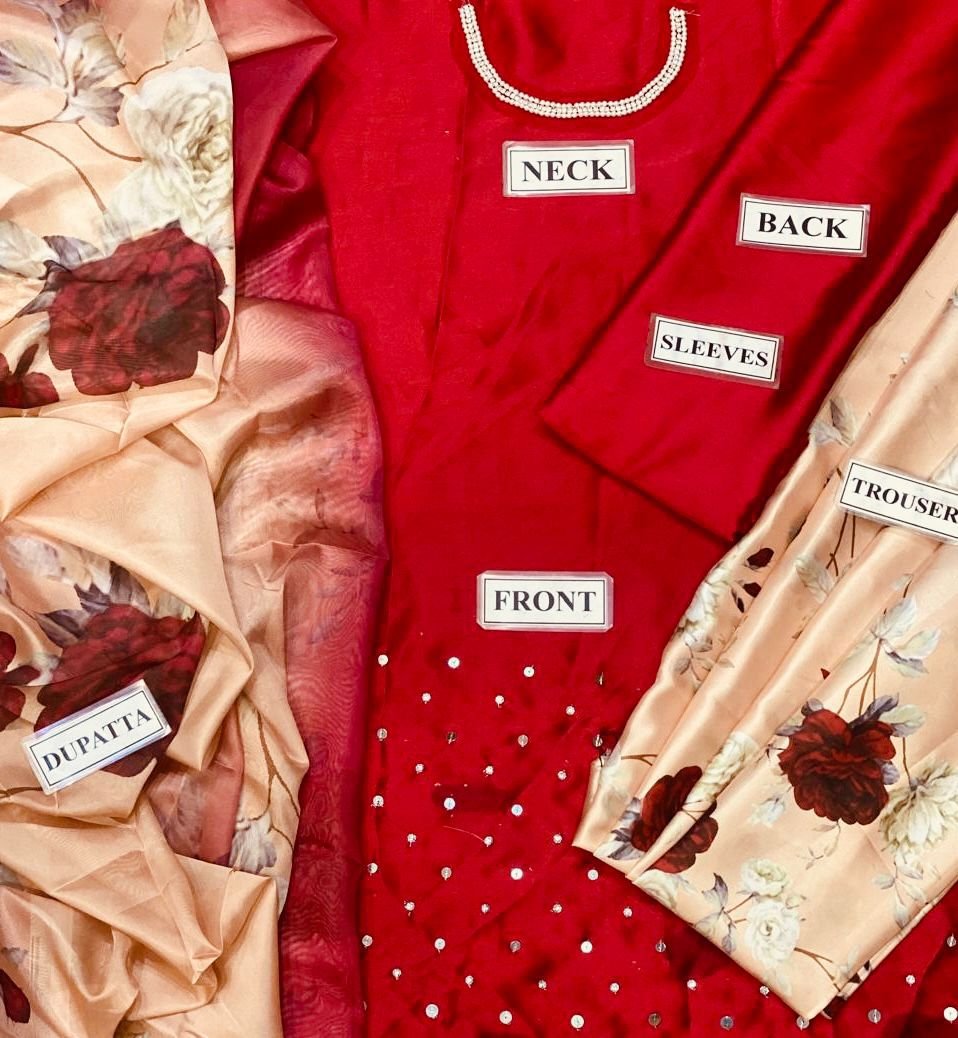


Lulusar Silk Fabric:
- Shirt: Silk
- Dupatta: Silk
- Trouser: Silk
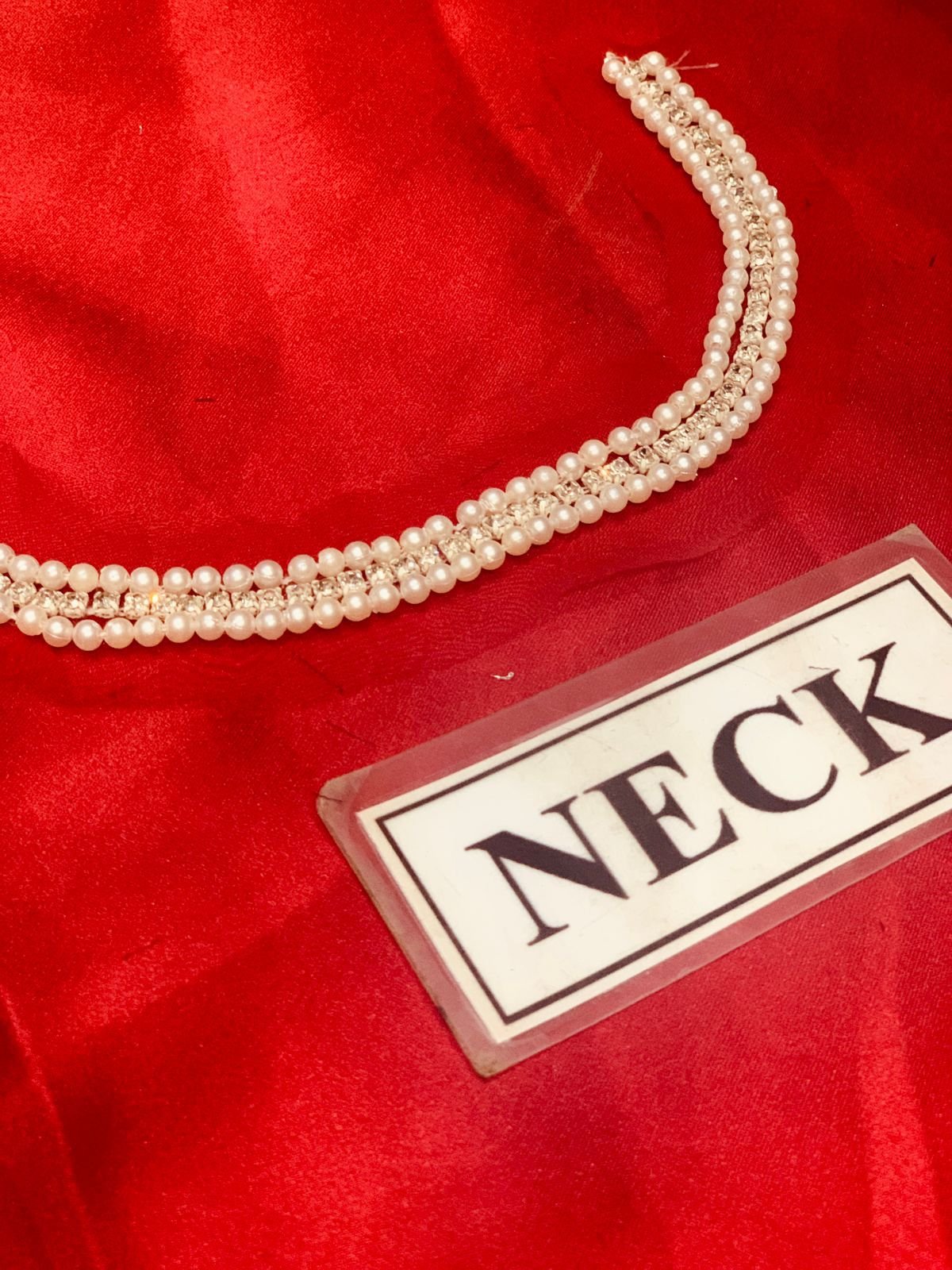
- Embroidered Gala with Stone Work
- Shamoze Silk Digital Print Front
- Shamoze Silk Digital Print Back
- Shamoze Silk Digital Print Sleeves
- Silk Digital Print Dupatta
- Silk Trouser
The Timeless Elegance of Pakistani Fashion
A Glimpse into Traditional Dresses
Pakistan’s fashion industry beautifully blends heritage and modern aesthetics. From intricate embroidery to luxurious fabrics, Pakistani dresses consistently reflect elegance and cultural pride. Whether someone admires a heavily embellished bridal lehenga or prefers the simplicity of a cotton kurta, Pakistani fashion captures history, artistry, and identity in every stitch.
Moreover, Pakistani clothing goes beyond style alone. It represents culture, tradition, and craftsmanship passed down through generations. Over time, designers have modernized silhouettes and tailoring techniques. However, traditional dresses continue to remain the foundation of Pakistan’s fashion identity.
The Cultural Importance of Pakistani Dresses
Traditional Pakistani dresses play a vital role in daily life and celebrations alike. They reflect regional influences, craftsmanship, and symbolism. Additionally, these garments showcase how culture adapts without losing its roots.
Furthermore, designers skillfully combine hand-crafted textiles with modern cuts. As a result, Pakistani fashion appeals to both local and global audiences while maintaining authenticity.
Key Features of Pakistani Dresses
Fabric Variety
Fabric choice defines the beauty and comfort of Pakistani dresses. Pakistan produces a wide range of high-quality textiles, which designers carefully select based on occasion and season.
-
Silk: Designers often choose silk for weddings and formal events because it enhances embroidery and adds a luxurious sheen.
-
Cotton: People prefer cotton for everyday wear due to its breathability and comfort, especially in summer.
-
Chiffon: Designers use chiffon for festive wear because it drapes gracefully and feels lightweight.
-
Velvet: For winter weddings, velvet adds richness, warmth, and grandeur.
Thus, fabric selection directly influences both appearance and wearability.
Intricate Embroidery & Handwork
Embroidery remains the heart of Pakistani fashion. Artisans actively preserve centuries-old techniques while adding modern detailing.
-
Zardozi: Craftsmen use gold and silver threads for bridal and formal wear.
-
Phulkari: Punjabi artisans create bold floral motifs on dupattas and shawls.
-
Kashmiri work: Designers use fine threads to produce delicate floral and paisley patterns.
-
Stonework & beading: Bridal outfits frequently feature pearls, crystals, and stones for added glamour.
Consequently, embroidery transforms fabric into wearable art.
Traditional Cuts & Silhouettes
Pakistani dresses feature silhouettes that flatter the body while ensuring comfort.
-
Shalwar Kameez: The most iconic outfit, worn nationwide for daily and formal use.
-
Lehenga Choli: Brides commonly choose this for weddings due to its regal appeal.
-
Anarkali: This flowing frock-style dress suits formal and semi-formal occasions.
-
Maxi Dresses: Designers blend eastern embroidery with western-inspired cuts for a modern look.
Therefore, traditional cuts remain relevant while evolving stylistically.
Color Palettes & Symbolism
Color plays a powerful role in Pakistani fashion.
-
Bold hues: Red, maroon, and gold symbolize love and prosperity in weddings.
-
Pastels: Peach, mint, and lavender dominate daytime and summer events.
-
Neutrals: Ivory and beige create understated elegance.
-
Bright tones: Fuchsia and royal blue add vibrancy to festive wear.
As a result, color selection often reflects emotion and occasion.
The Role of the Dupatta
The dupatta completes a Pakistani outfit both aesthetically and culturally. Designers use silk, chiffon, or net and decorate it with embroidery, lace, or sequins. Additionally, it symbolizes grace and modesty while enhancing overall styling.
Pakistani Bridal Dresses: A Cultural Masterpiece
Pakistani bridal wear represents the peak of craftsmanship. Designers meticulously create each bridal outfit using rich fabrics and detailed embellishments.
Key Bridal Elements
-
Heavy embroidery: Artisans combine zardozi, beads, and sequins.
-
Luxury fabrics: Designers favor silk, velvet, and chiffon.
-
Vibrant colors: While red dominates, brides now choose maroon, gold, and blush tones.
-
Statement dupatta: Brides drape heavily embellished dupattas over the head and shoulders.
Thus, bridal attire becomes a statement of tradition and luxury.
The Evolution of Pakistani Fashion
Over the years, Pakistani fashion has evolved rapidly, especially in major cities. Designers now blend western trends with eastern aesthetics.
-
Fusion styles: Cropped blouses, asymmetrical kurtas, and modern maxis lead trends.
-
Casual chic: Women increasingly wear tunics, jeans, and scarves for daily use.
Nevertheless, designers continue to preserve cultural identity.
Conclusion
Pakistani fashion reflects timeless elegance, skilled craftsmanship, and cultural depth. From ornate bridal lehengas to breathable cotton kurtas, these garments cater to every occasion. Moreover, embroidery, fabric selection, and symbolism highlight Pakistan’s rich heritage.
Ultimately, Pakistani dresses stand as a powerful expression of tradition, creativity, and evolving style.
-


Reviews
There are no reviews yet.